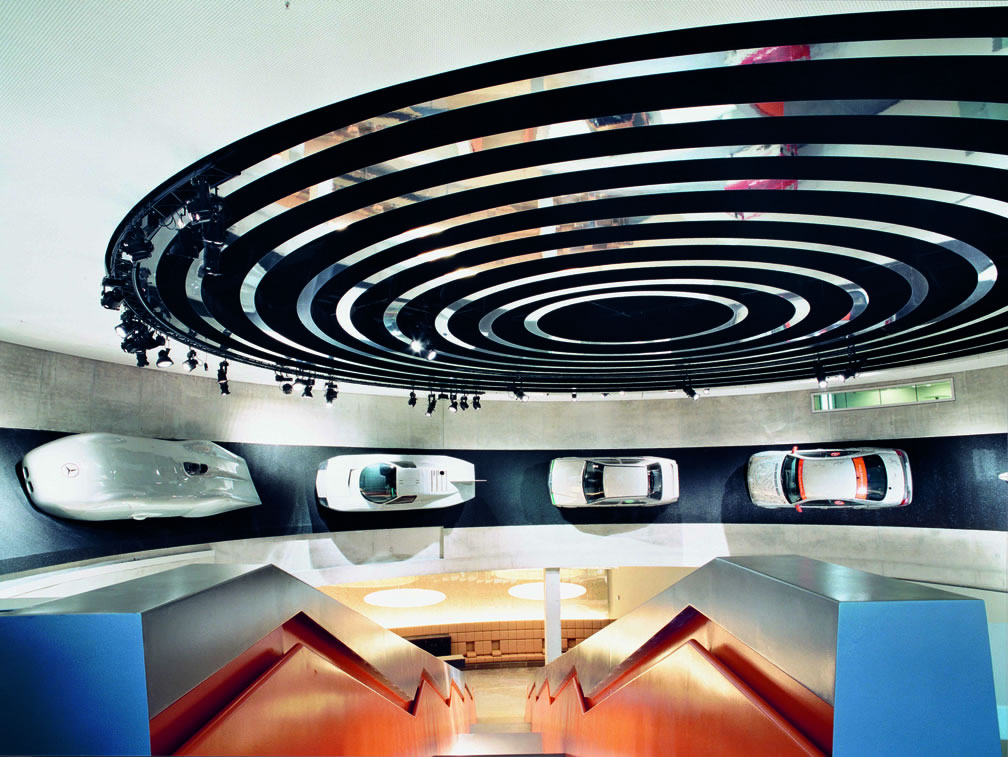
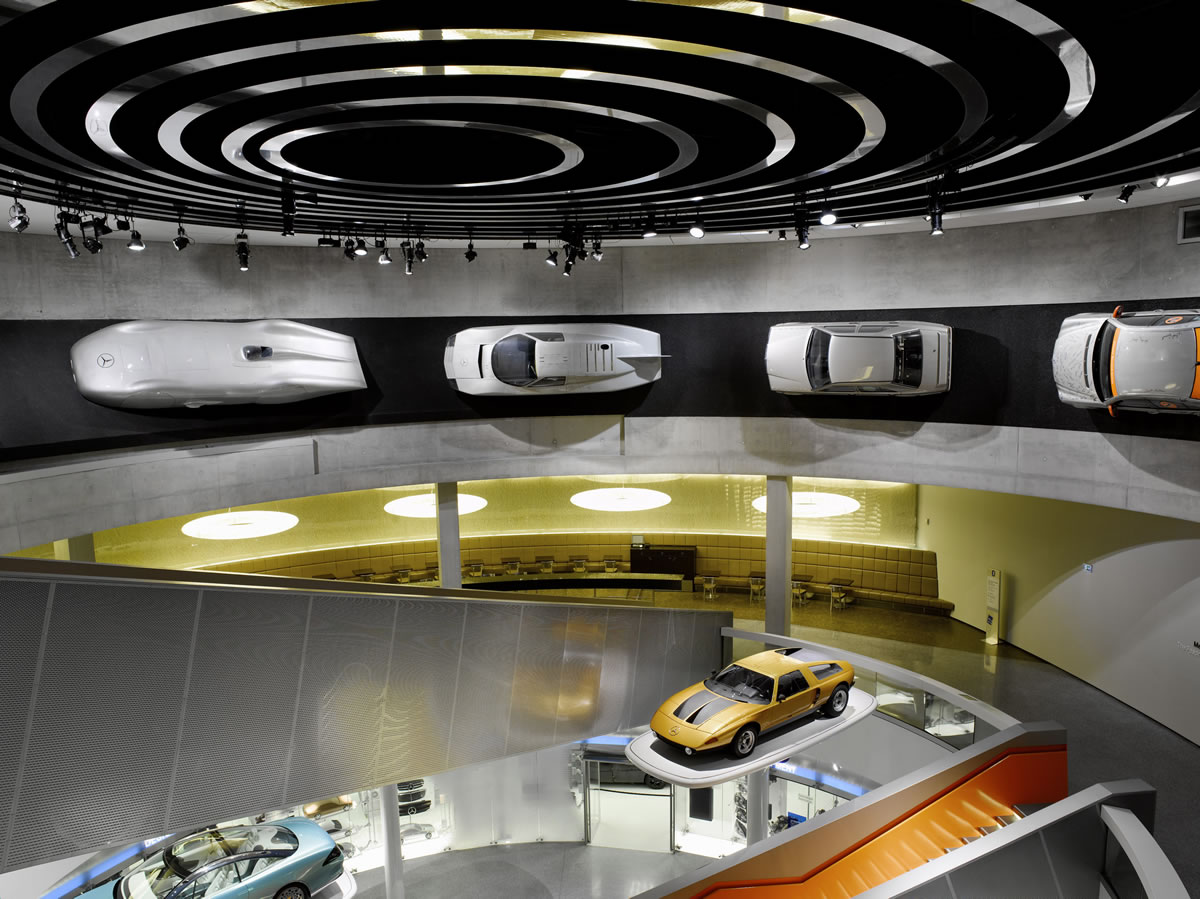
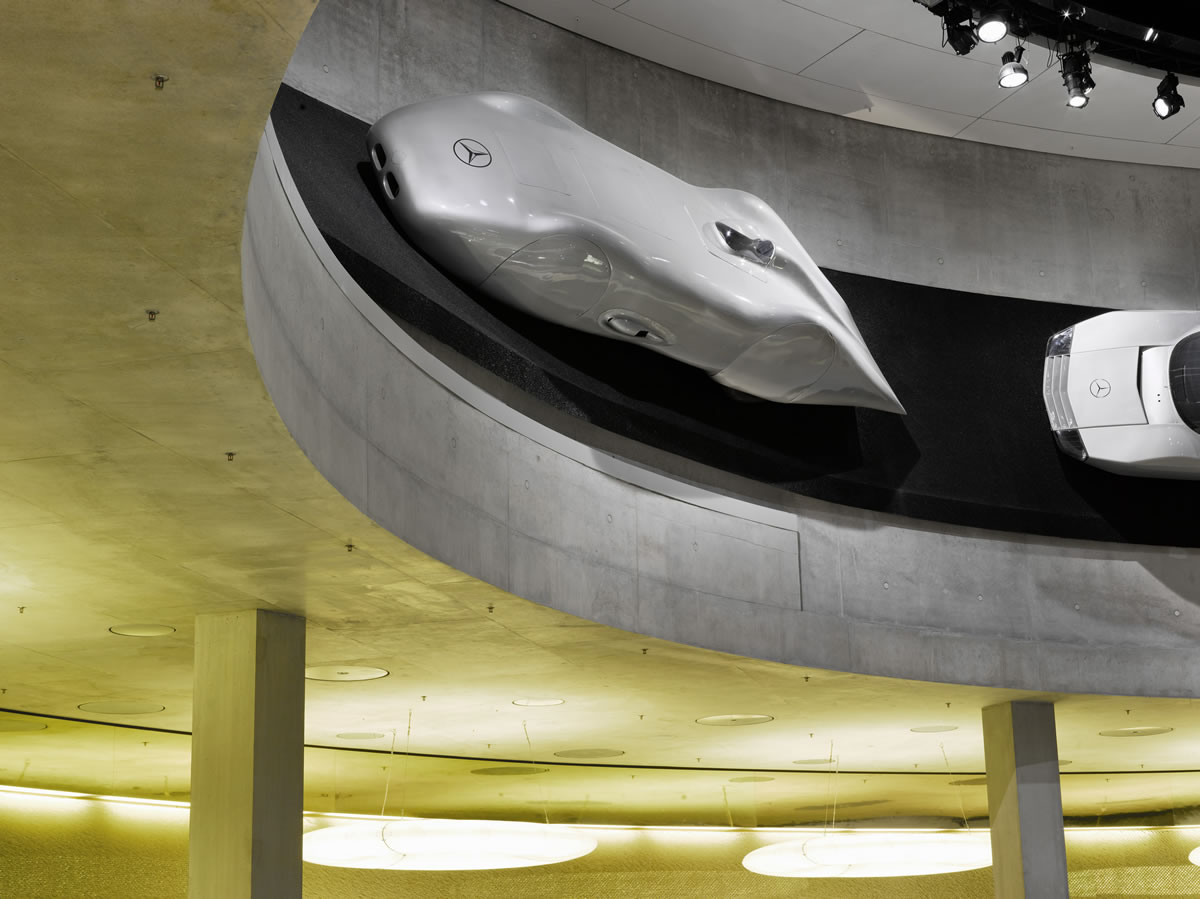
On January 28, 1938, the Mercedes-Benz W 125 car set a world speed record on a public road, a record which still stands to this day. With a speed of 268.8 mph (432.7 km/h) and Rudolf Caracciola as pilot, the W125 went down in history books. The original vehicle can now be seen showcased at the Mercedes-Benz Museum in Suttgart.
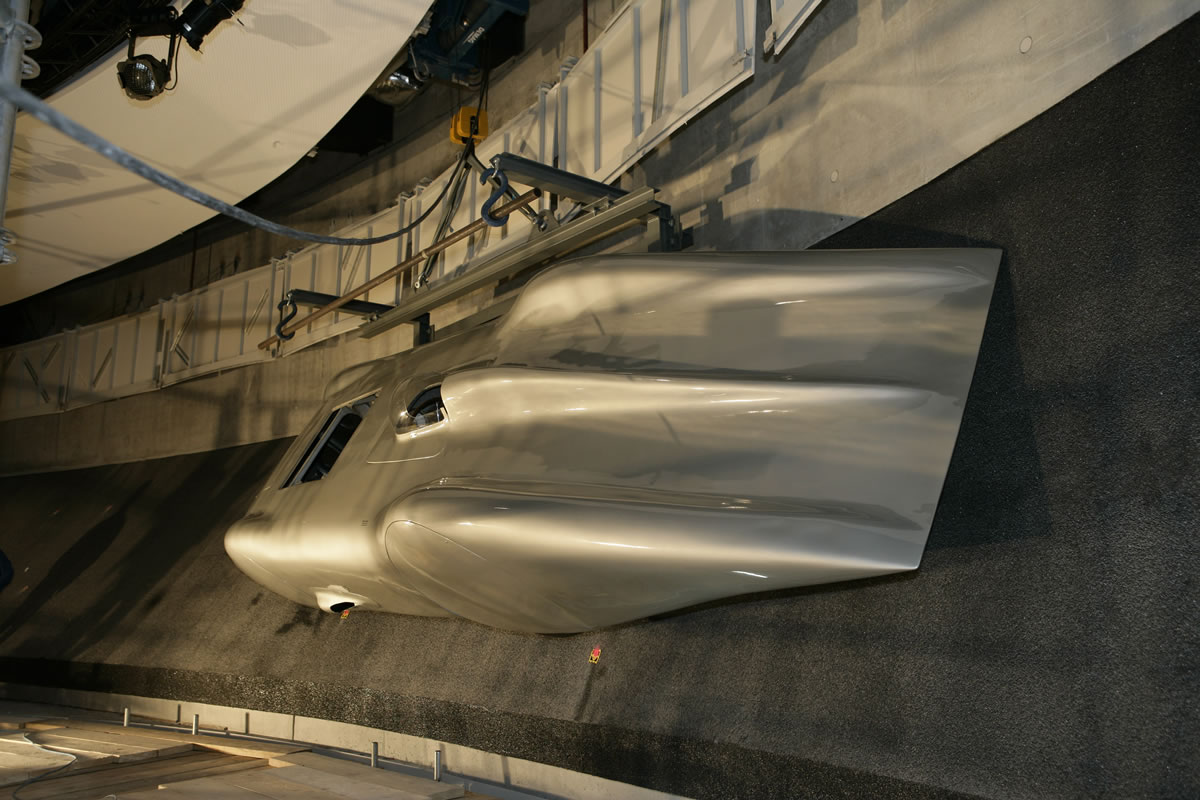
“Time and again our visitors talk about the spectacular presentation of the Mercedes-Benz W 125 record-breaking car, which is hanging on a vertical wall. Together with six other record-breaking vehicles, the streamlined car adds the impressive finishing touch to the high-bank curve in Legend Room 7‚ ‘Silver Arrows – Races and Records’. Acoustically, there is even an atmosphere similar to that found on the race track”, explains Michael Bock, Head of Mercedes-Benz Classic.
Rudolf Caracciola, who at that time was the lead driver for the Mercedes-Benz racing department, achieved the record – which is still valid to this day – on 28 January 1938 on the road between Frankfurt am Main and Darmstadt, by hitting a speed of precisely 432.692 km/h over one kilometre with a flying start. In addition, the existing record over the flying mile was also set at 432.36 km/h. These figures represent the averages from two runs made in opposite directions.
For this top speed run, the Mercedes-Benz W 125 record-breaking car made use of an aerodynamically optimised body. Streamlined racing cars were not unusual at the time: Mercedes-Benz also successfully made use of them in circuit races.
For the record runs in January 1938, the record-breaking car – which was based on the W 125 Silver Arrow – was not only equipped with a specially optimised twelve-cylinder engine with two superchargers, but also featured a flat, completely covered body with wedge-shaped, tapered tail end. Using wind tunnel measurements, the engineers reduced the aerodynamic drag to a sensational Cd value of 0.157. This included using a radically scaled-down air intake on the front end. As a result, the record-breaking car only “breathed in” – through two small openings – the amount of air required for the 5.6-litre V12 MD 25 DAB/3-type engine to work. Engine cooling, on the other hand, was achieved without using fresh air: instead the radiator was embedded in a 500-litre chest filled with ice and water.
- Year of construction: 1938
- Cylinders: V12
- Displacement: 5577 cc
- Power output: 736 hp (541 kW)
- Top speed: 432.7 km/h